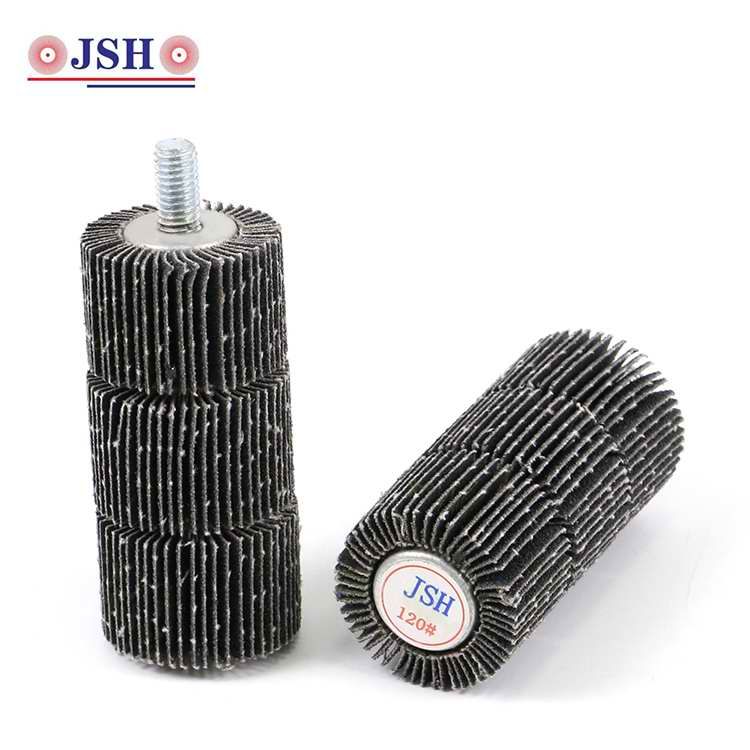
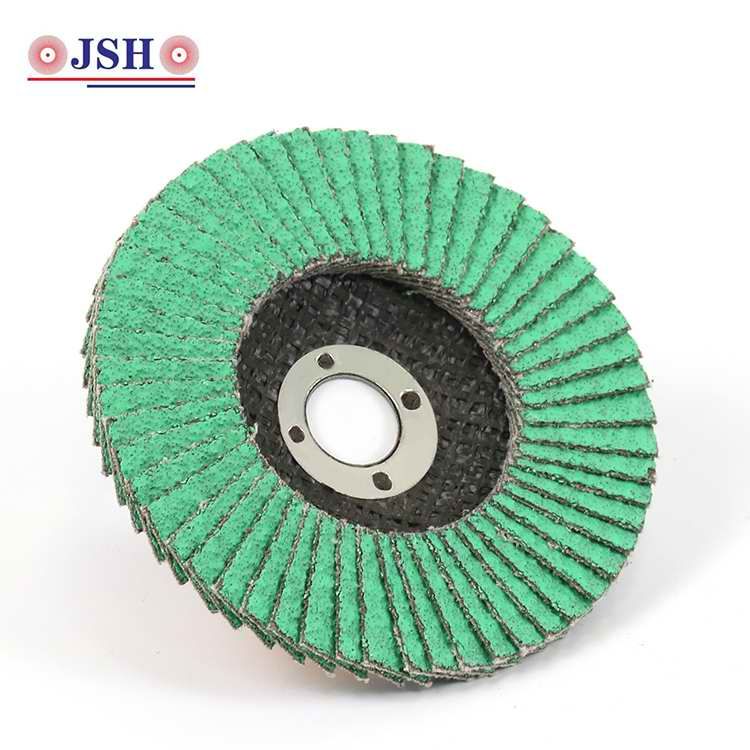
Here is a complete breakdown of how to match the right flap disc material, shape, and grit to your specific metalworking application. Choosing the wrong abrasive doesn't just slow you down—it can permanently damage expensive workpieces and secretly drain your consumable budget. Below is a structured guide to help you eliminate guesswork, prevent metal discoloration, and maximize your grinding efficiency.
Picture this: You’ve just spent hours fabricating a beautiful stainless steel exhaust manifold. You grab a fresh flap disc to blend the welds, but within minutes, the metal turns a nasty rainbow-blue, and the disc is completely bald.
If this sounds familiar, you are likely using the wrong abrasive material for the job. In modern metal fabrication, flap discs are not a "one-size-fits-all" tool. Selecting the correct flap disc material is the critical difference between a flawless, profitable finish and a scrapped workpiece. To optimize your workflow, we need to look beyond the price tag and understand the science of abrasives.
When purchasing consumables, it is tempting to grab the cheapest disc on the shelf. However, a lower upfront cost often leads to a higher Total Cost of Grinding (TCG).
The true cost of a flap disc includes the time your operators spend changing worn-out discs (downtime) and the physical effort required to make a dull disc cut. The secret to a high-performing flap disc lies in its self-sharpening ability (friability).
Premium materials are designed to micro-fracture under pressure, constantly exposing fresh, razor-sharp edges. Cheap materials simply dull and round over, forcing the operator to push harder, which generates excessive heat and burns the metal. Investing in the right material means faster cut rates, less operator fatigue, and significantly fewer disc changes.
To make the best choice, you need to match the abrasive grain to the hardness of your workpiece. Here is the definitive breakdown of the three main flap disc materials.
Typically brown in color, Aluminum Oxide is the original, general-purpose abrasive. It is tough and durable but lacks the aggressive self-sharpening properties of modern grains.
Usually blue or green, Zirconia (or "Zirc") is the industry standard for professional fabrication. It requires heavier pressure to break down the grains, making it incredibly efficient for aggressive stock removal.
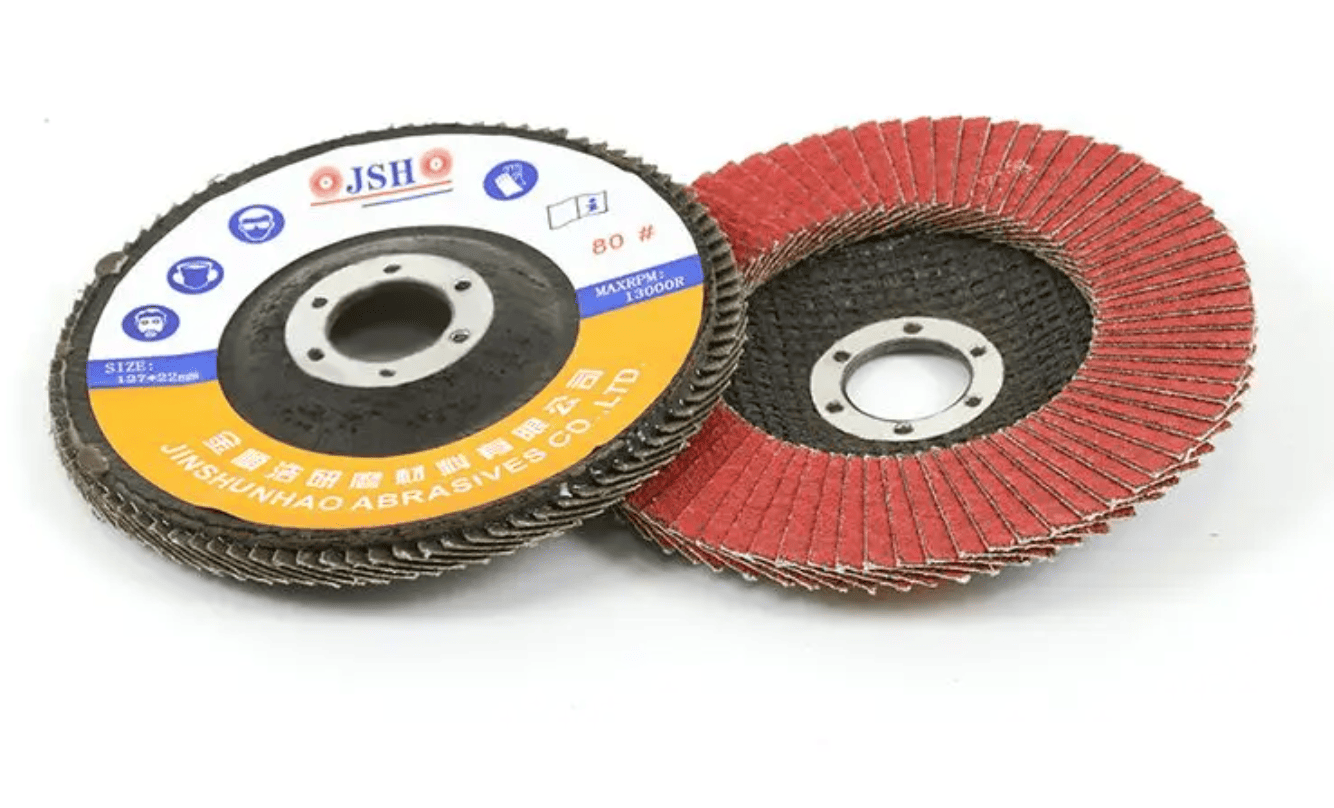
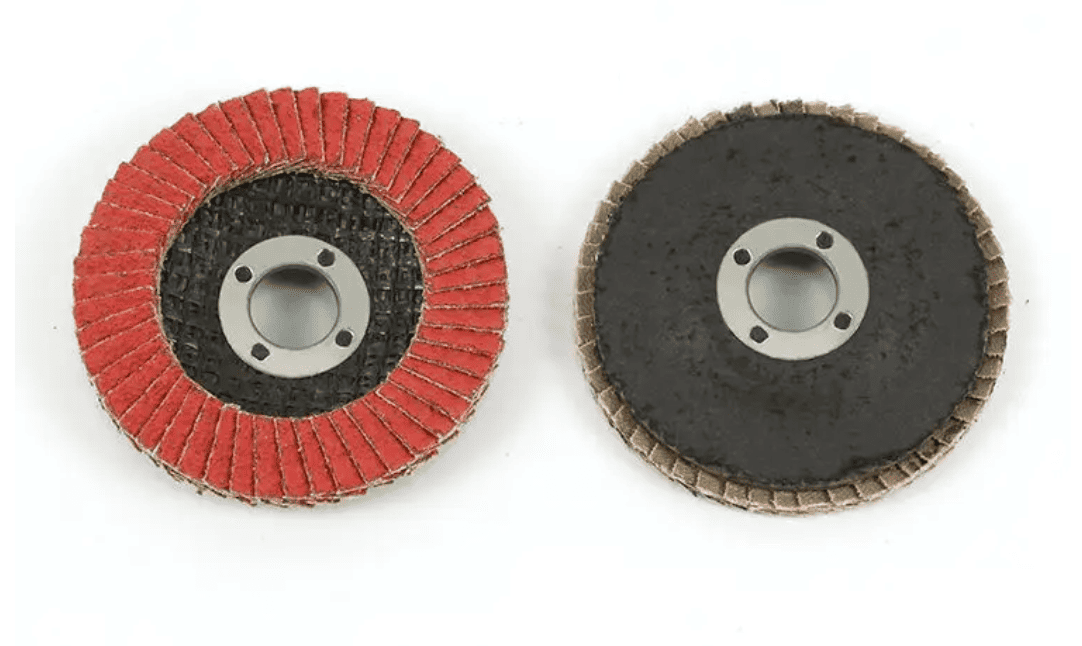
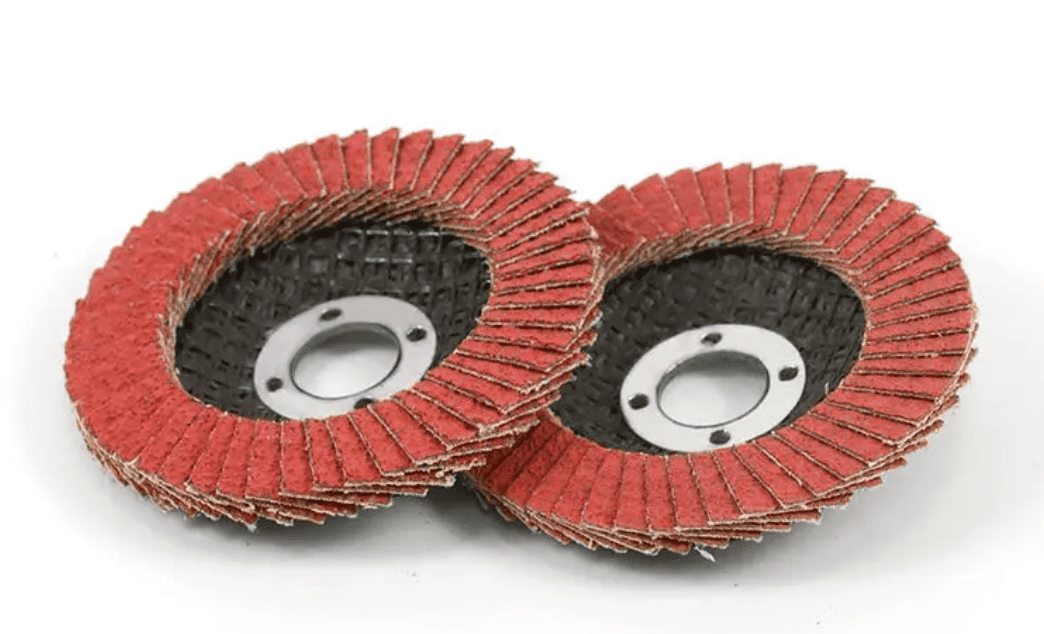
Often red or bright orange, Ceramic alumina is the most advanced abrasive available. Its unique crystalline structure micro-fractures constantly, requiring very little pressure to maintain a sharp edge. This results in a "cool cut" that prevents heat build-up.
| Material | Relative Cost | Best For | Key Advantage |
| Aluminum Oxide | Low | Mild Steel, Wood | Highly economical for light jobs |
| Zirconia | Med | Carbon Steel, Heavy Welds | Best overall value, aggressive cut |
| Ceramic | High | Stainless Steel, Titanium | Longest life, cold-cutting technology |
Even if you choose the perfect material, selecting the wrong disc shape will ruin your efficiency. Flap discs come in two primary profiles:
Pro Tip on Grits: Use 40-grit for heavy weld removal, 60-grit for edge chamfering and blending, and 80 to 120-grit for final surface finishing.
Even experienced fabricators run into issues. Here is how to troubleshoot the three most common flap disc failures:
Need to make a fast decision on the shop floor? Follow this simple logic:
A: Yes. Aluminum Oxide flap discs (usually 60 or 80 grit) work exceptionally well for heavy material removal on wood, such as shaping logs or removing thick layers of old paint. Avoid using Zirconia or Ceramic on wood, as they require too much pressure to self-sharpen.
A: Premature edge wear usually happens when you use a flat T27 disc at too steep of an angle. If you need to grind at a high angle (15°-25°) to dig into a weld, always use a conical T29 disc.
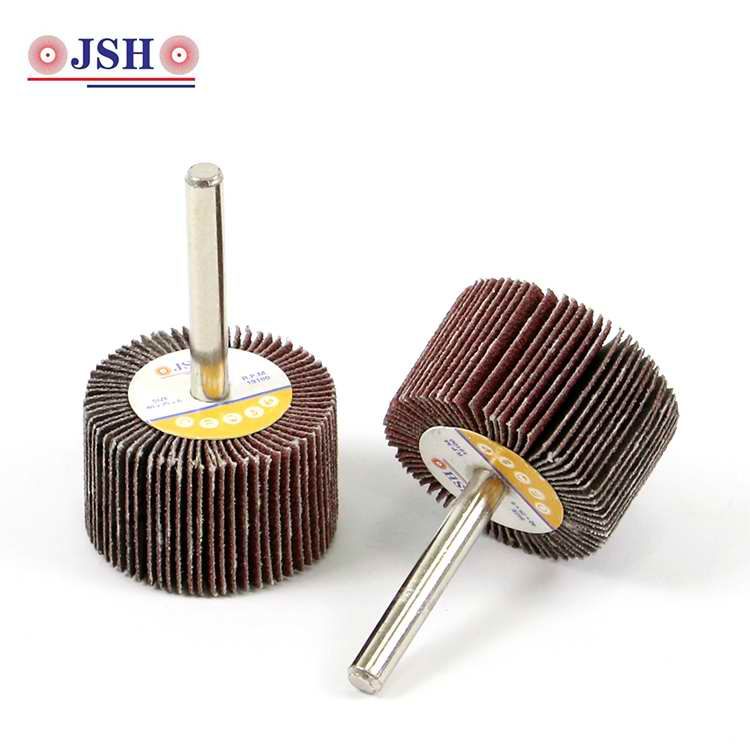
A: Flap wheels provide precision and versatility for contoured surfaces with less heat and noise, while flap discs offer greater durability and aggressive material removal for flat surfaces and heavy-duty metalworking.
A: Yes. The fiberglass backing and the resin adhesives used in flap discs can degrade over time, especially if stored in highly humid or fluctuating temperatures. It is generally recommended to use flap discs within 3 years of their manufacturing date for safety reasons.
A: Never use a flap disc on stainless steel if it has previously been used on carbon steel. The disc will embed microscopic carbon particles into the stainless, which will cause it to rust. Always keep dedicated, clearly marked Ceramic or Zirconia discs strictly for stainless steel work.