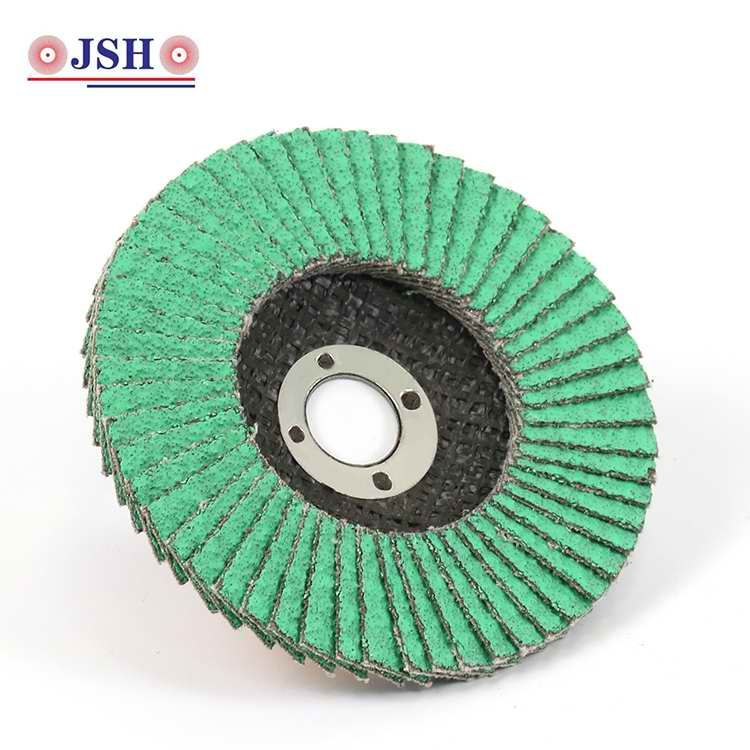
When a buyer asks which flap wheel to use on stainless steel pipe, the first answer is usually about grit. But the abrasive material matters just as much. Two wheels with the same grit can behave completely differently on stainless steel if one uses aluminum oxide and the other uses ceramic.
Stainless steel is tough, resists cutting and heats up quickly. The wrong abrasive burns the surface, glazes the wheel or wears out too fast. The three abrasives you will meet most often are aluminum oxide, zirconia alumina and ceramic. This article explains how they differ and where each one belongs.
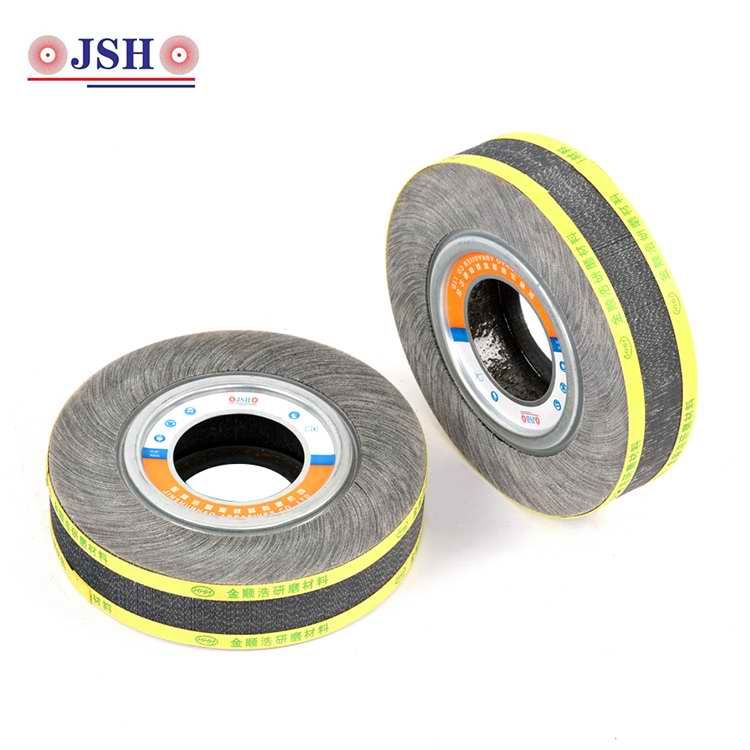
| Abrasive | Cutting and heat | Best suited for | Relative cost |
|---|---|---|---|
| Aluminum oxide | Steady, controlled cut; more heat on heavy work | Blending and finishing | Low |
| Zirconia alumina | Aggressive, self-sharpening; runs cooler | Weld seam and stock removal | Medium |
| Ceramic | Very cool, micro-fracturing; longest life | High-pressure, high-volume grinding | High |
The abrasive grain is what removes material, and different grains break down in different ways.
Those differences show up directly in the result. A grain that breaks down too fast leaves an uneven finish and a short wheel life. A grain that does not break down becomes dull and rubs the surface, producing heat instead of cutting. On stainless steel, that heat causes the blue and black discoloration operators constantly fight.
Aluminum oxide is the most widely used abrasive in the industry. It is economical, available in a wide range of grits and predictable on most metals.
For light finishing work, these limits rarely matter. For heavy grinding on stainless steel, a tougher abrasive usually performs better.
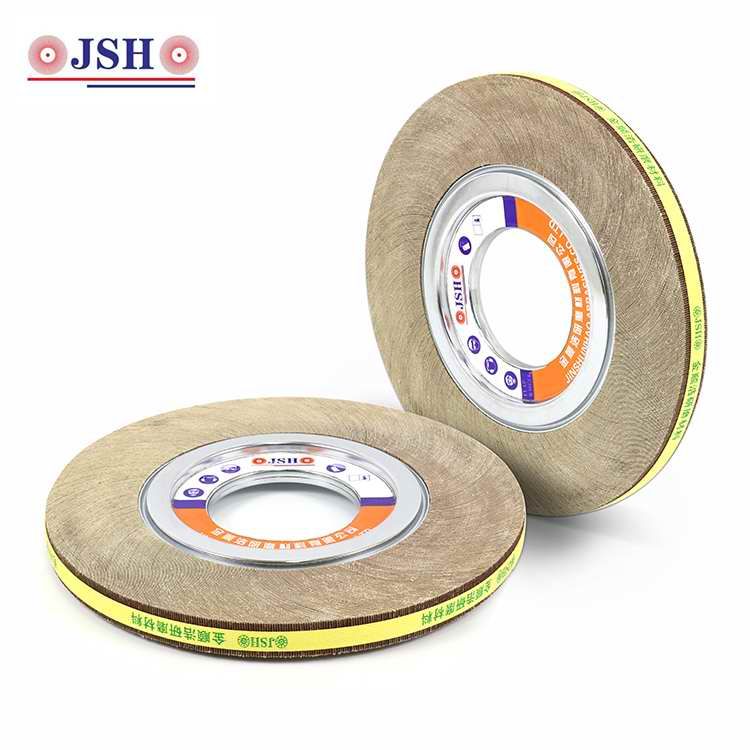
Zirconia alumina, often called zirconia or ZA, is a step up in toughness and is built for the work aluminum oxide struggles with.
Ceramic alumina is the newest and most aggressive of the three. It is designed for high-pressure, high-speed applications where heat control and long life matter more than the initial price.
The best way to choose an abrasive is to match it to the stage of the process.
Weld seam removal and deep scratch removal are aggressive jobs. This is where zirconia alumina or ceramic makes the most sense, because both handle heat better than aluminum oxide. A coarse zirconia wheel takes down a weld without generating the excessive heat that burns the pipe.
Once the heavy material is gone, the goal changes from cutting to controlling the surface. Aluminum oxide becomes more attractive here, because it is economical and produces an even finish at medium and fine grits. On high-volume lines, a fine ceramic wheel can still be justified by longer life, but the decision becomes a cost calculation.
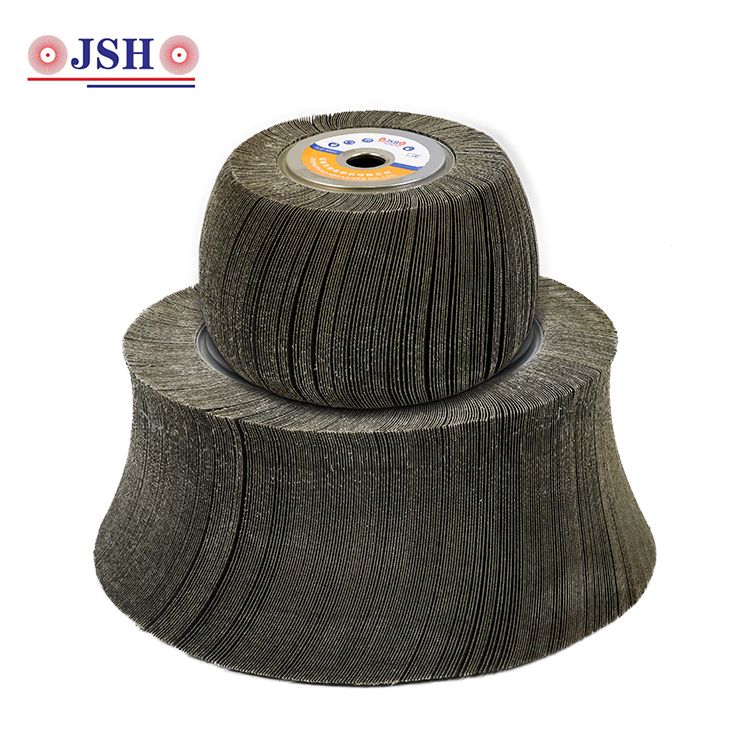
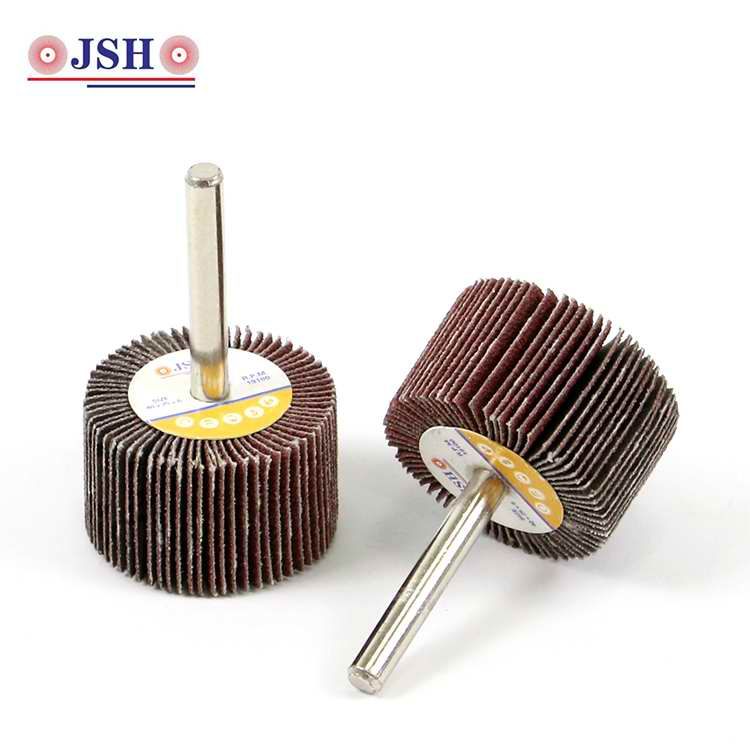
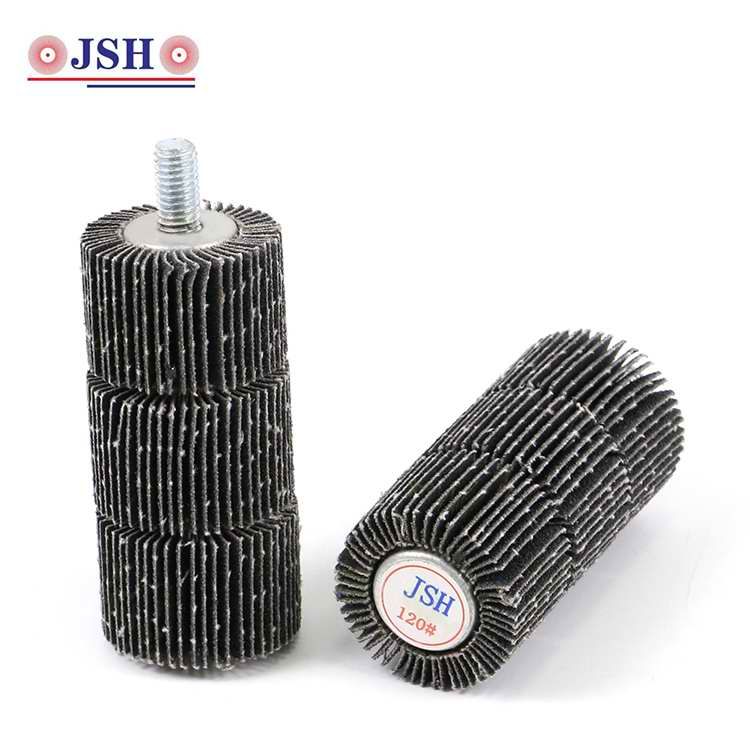
The general flap wheel models on the JSH product page, the Flap Wheels FW001, Flap Wheels FW002 and Flap Wheels FW003, are available for outer wall grinding and blending, and the abrasive and grit can be specified according to the stage. For inner wall work, the Inside polish Flap wheel FW005A is the product for polishing inside the bore. For irregular profiles, the Special Shaped Flap Wheel FW008 is the flexible option, while shaft-mounted detail work points to the Flap wheel with shank category.
When ordering, the useful information is the same in every case: the stainless steel grade, the pipe diameter and wall thickness, the stage of the process and the required final finish. With those details, the abrasive can be matched to the job instead of guessing.
The choice between aluminum oxide, zirconia and ceramic is not about finding the single best abrasive. It is about matching the abrasive to the work. Zirconia and ceramic handle the tough, hot work of weld removal and heavy grinding, while aluminum oxide does the finishing at a lower cost.
For stainless steel pipe, a practical rule is to let zirconia or ceramic do the heavy cutting and let aluminum oxide do the final blending. That combination keeps the pipe cool, the surface even and the cost per piece under control. The right starting point is always the same: describe the pipe and the polishing stage clearly, then select the flap wheel with the abrasive that fits that stage.