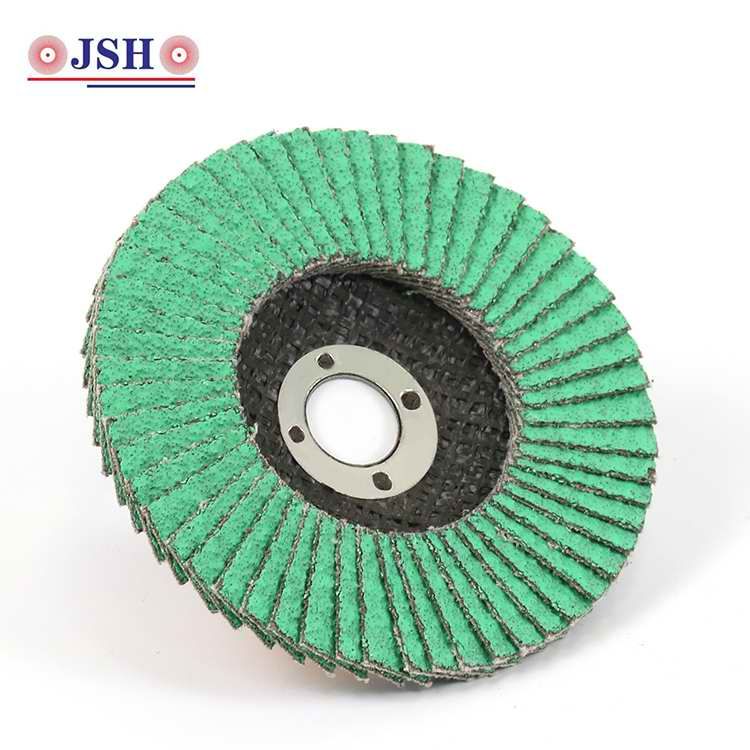
Walk into any modern factory today, and you will see robotic arms polishing stainless steel tubes, automotive parts, and hardware components. Automation is spreading fast – not because it is trendy, but because it solves real problems: labor shortages, inconsistent quality, and the need for higher output.
But here is something many manufacturers learn the hard way: a program that works perfectly with one flap wheel may fail completely with the next batch.
Why? Because a human operator can feel when a wheel is wearing down, hear when it vibrates, and adjust pressure on the fly. A robot cannot. It follows a fixed program. If the flap wheel behaves differently – even slightly – the robot will keep running the same cycle and produce the same defect until someone stops the line.
That is why choosing the right flap wheel for robotic polishing is not a minor purchasing decision. It directly affects uptime, scrap rate, and the return on your automation investment.
What this article covers:
Why FW001 series works better than standard flap wheels on robotic arms
How JSH ensures safety, consistency, and long life
Real examples from Europe, the US, and Southeast Asia
What to ask your abrasive supplier before automatingWhat to Look for in a Flap Wheel for Robotic Polishing
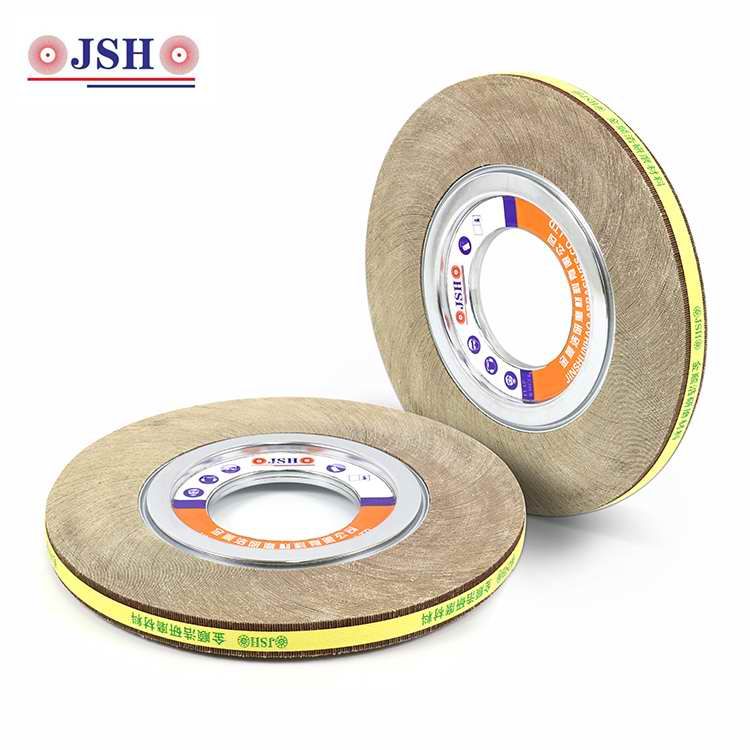
Before we recommend a specific product, let us agree on the selection criteria. Not every flap wheel that works well in a hand grinder will perform on a robotic arm.
Three non-negotiable requirements:
| Requirement | Why It Matters for Robotics |
|---|---|
| Consistency from wheel to wheel | The robot's program assumes every wheel cuts the same. If one wheel is softer or harder, surface finish changes. |
| Dynamic balance | An unbalanced wheel vibrates. Vibration damages the robotic arm's precision bearings and leads to rejected parts. |
| Thermal safety | No operator is holding the wheel. If it generates too much heat, the robot will continue polishing until the workpiece is burned or warped. |
If a flap wheel fails any of these three tests, it does not belong on an automated line – no matter how low its price.
Beyond the basics, consider:
Life expectancy – Longer life means fewer automatic tool changes and less downtime
Flexibility – The wheel must conform to part contours without manual adjustment
Grit range – Can the same family of wheels handle roughing, intermediate, and finishing?
With these criteria in mind, let us look at why the FW001 series has become a common choice for robotic applications.
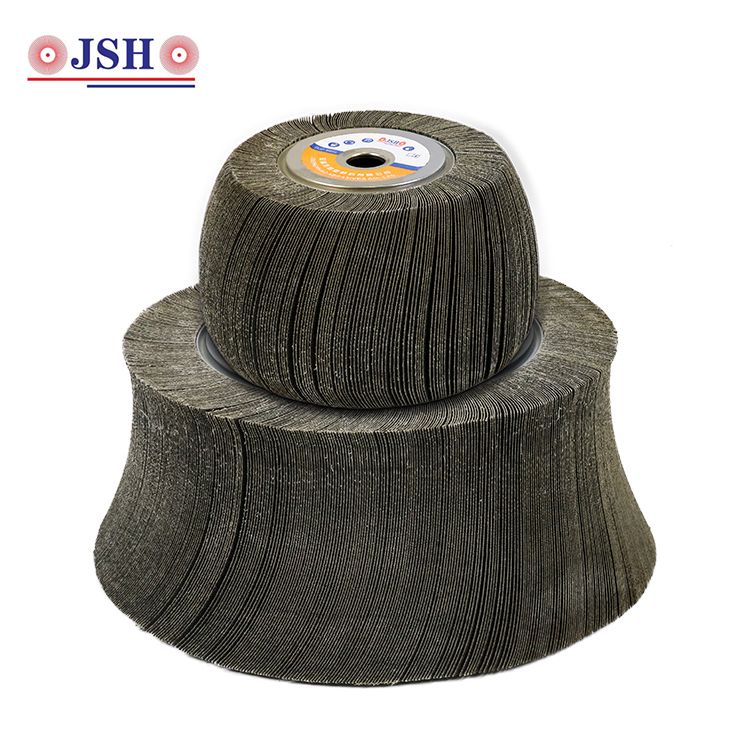
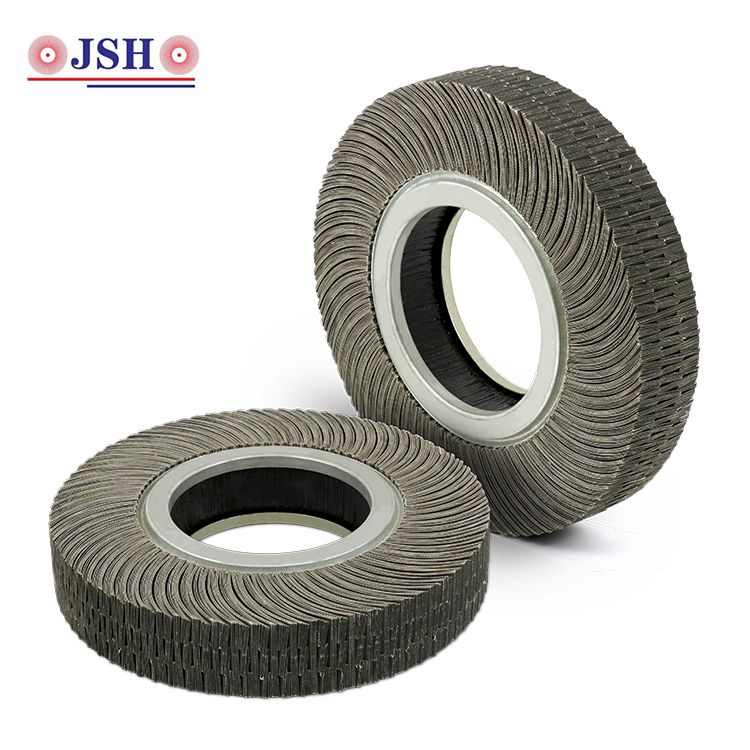
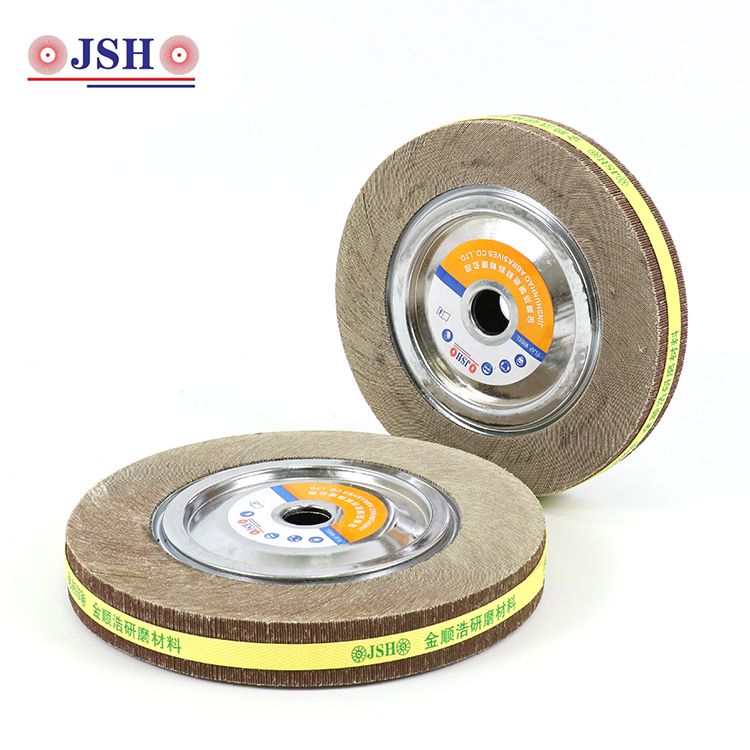
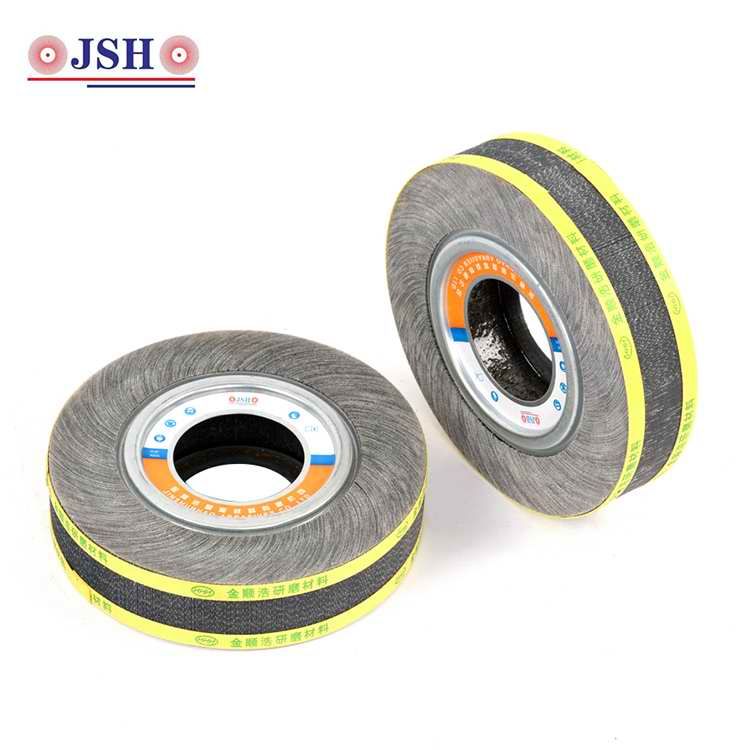
The FW001 flap wheel series was not designed by accident. It was developed specifically to address the weaknesses of general-purpose flap wheels when used on robotic arms.
1. Flexibility that follows the part
On an automated line, parts are not perfectly identical. Welded seams vary slightly. Tube diameters have tolerances. A rigid flap wheel cannot compensate. The FW001 uses a layered construction with controlled flexibility. It conforms to the workpiece surface naturally, maintaining contact pressure even when the part geometry changes within tolerance. The result is even material removal across the entire surface – not just the high spots.
2. Safe not to burn the workpiece
This is not a marketing phrase. It is a measurable characteristic. The FW001 combines selected abrasives with a heat-dissipating bond system. Even at sustained high speeds – typical for robotic arms – the wheel keeps surface temperatures below the threshold where stainless steel discolors or micro-cracks.
Why does this matter? A single burned part on an automated line can mean scrapping an expensive component. For automotive or food-grade stainless applications, thermal damage is an automatic reject. The FW001 significantly reduces that risk.
3. Wide size and grit range for one-stop specification
Robotic lines often have multiple stations: coarse grinding (removing weld seams or mill scale), medium smoothing, and fine finishing. The FW001 series covers all three with consistent construction.
Available options:
Outer diameter: 125mm to 350mm
Grit sizes: 40 to 800 mesh
Widths: Customizable to your part geometry
This means you can standardize on one product family across your entire automated polishing line. Easier inventory. Predictable changeover procedures. No surprises.
A good design is useless without consistent manufacturing. Here is what JSH does differently to ensure that every FW001 wheel performs exactly as expected – batch after batch.
Safety and dynamic balance testing
JSH uses European-standard testing equipment and professional dynamic balancing instruments. Every large flap wheel intended for automated lines is checked for balance before it leaves the factory. This is not random sampling; it is systematic testing.
What this prevents:
Vibration that wears down robotic arm joints
Out-of-balance forces that cause surface chatter marks
Premature bearing failure on expensive spindles
For a production manager, this means fewer unplanned stops. For a maintenance engineer, it means longer equipment life.
Self-developed JSH sanding cloth – the hidden advantage
Most flap wheel manufacturers buy sanding cloth from third-party suppliers. They have limited control over its performance. JSH is different. It develops and produces its own JSH brand sanding cloth specifically for stainless steel and metal polishing.
What self-developed cloth delivers:
Higher cutting efficiency – The robot achieves its target material removal within the programmed cycle time. No need to slow down the line.
Longer service life – Fewer tool changes. On a busy automated line, reducing change frequency from every 2 hours to every 6 hours can add 30+ minutes of productive time per shift.
Stable friction characteristics – The wheel does not suddenly become aggressive or dull as it wears. The robot's program remains valid for the entire life of the wheel.
ERP system for batch-to-batch consistency
This is where many suppliers fail. Batch A works great. Batch B – made with different raw materials or slightly different parameters – behaves differently. The robot cannot tell the difference. It just produces bad parts.
JSH prevents this with a full ERP management system that tracks:
Raw material lots (sanding cloth, resin, backing plate components)
Production parameters (mixing time, curing temperature, pressure)
Quality inspection results (hardness, balance, dimensions)
Every FW001 batch is traceable. Every batch performs like the one before it. For the automation engineer, this is the most valuable feature of all: predictability.
Sometimes, a standard product is not the perfect fit. That is why JSH offers engineering support to customize flap wheels for specific robotic applications.
What customization can include:
Special diameters for tight robotic work envelopes
Modified hardness for unusual part geometries
Specific grit sequences for unique surface finish requirements
Test samples before volume production
With 20 years of industry experience, JSH has seen hundreds of polishing challenges. Rather than asking you to figure it out alone, the technical team works with you to define the optimal solution. This is not just selling products – it is providing a complete polishing solution.
Theory is good. Data is better. Here are three examples of FW001 performance on actual robotic polishing lines.
Case 1 – Germany: Sanitary stainless steel tubes
A German manufacturer of hygienic tubes for food processing switched from a general-purpose flap wheel to FW001 (300mm diameter, #400 grit) on a six-axis robotic cell.
Result: Consistent satin finish documented over 800 linear meters per wheel. Previous wheel life was 500 meters. Tool change frequency reduced by 38%. Line uptime improved.
Case 2 – Thailand: Automotive exhaust components
A supplier to the Thai automotive industry was changing flap wheels every 90 minutes on a high-volume robotic line. Each change required a 12-minute line stop.
After switching to FW001: Wheel life extended to 4 hours. Change frequency dropped from 8 times per shift to 2 times per shift. Daily productive time increased by over 70 minutes. OEE (Overall Equipment Effectiveness) improved by nearly 20%.
Case 3 – United States: General hardware finishing
A US-based hardware manufacturer introduced robotic polishing for stainless steel door handles. The initial flap wheel choice caused inconsistent edge radius and occasional burning.
FW001 solution: A custom hardness and #320 grit specification eliminated burning entirely. Edge consistency improved to within ±0.1mm across all parts. Scrap rate fell from 4.2% to 0.7%.
These are not laboratory results. They are daily production numbers from customers who made the switch.
If you are running – or planning – a robotic arm polishing line for stainless steel or metal parts, your choice of flap wheel matters more than you might think.
The wrong flap wheel will cause:
Inconsistent surface finish
Thermal damage to expensive workpieces
Frequent tool changes that kill uptime
Vibration that damages your robotic arm
The right flap wheel – FW001 from JSH – delivers:
Predictable, repeatable performance batch after batch
Safety against burning, even at high speeds
Long life that reduces change frequency
Custom options when your application demands it
JSH's mission is straightforward: "Service creates value, innovation builds the future." In practical terms, this means answering your questions honestly, providing test samples when needed, and standing behind every wheel we ship.
If you are currently operating an automated polishing line – or planning to install one – we invite you to contact JSH. Let us discuss your application, your robotic arm type, your workpiece material, and your target surface finish. We will recommend the right FW001 specification or develop a custom solution if needed.
The best flap wheel for robotic polishing is the one that runs reliably, shift after shift, without surprises. That wheel is FW001 from JSH.
Contact JSH today. Get the most reliable polishing material service for your automated line.